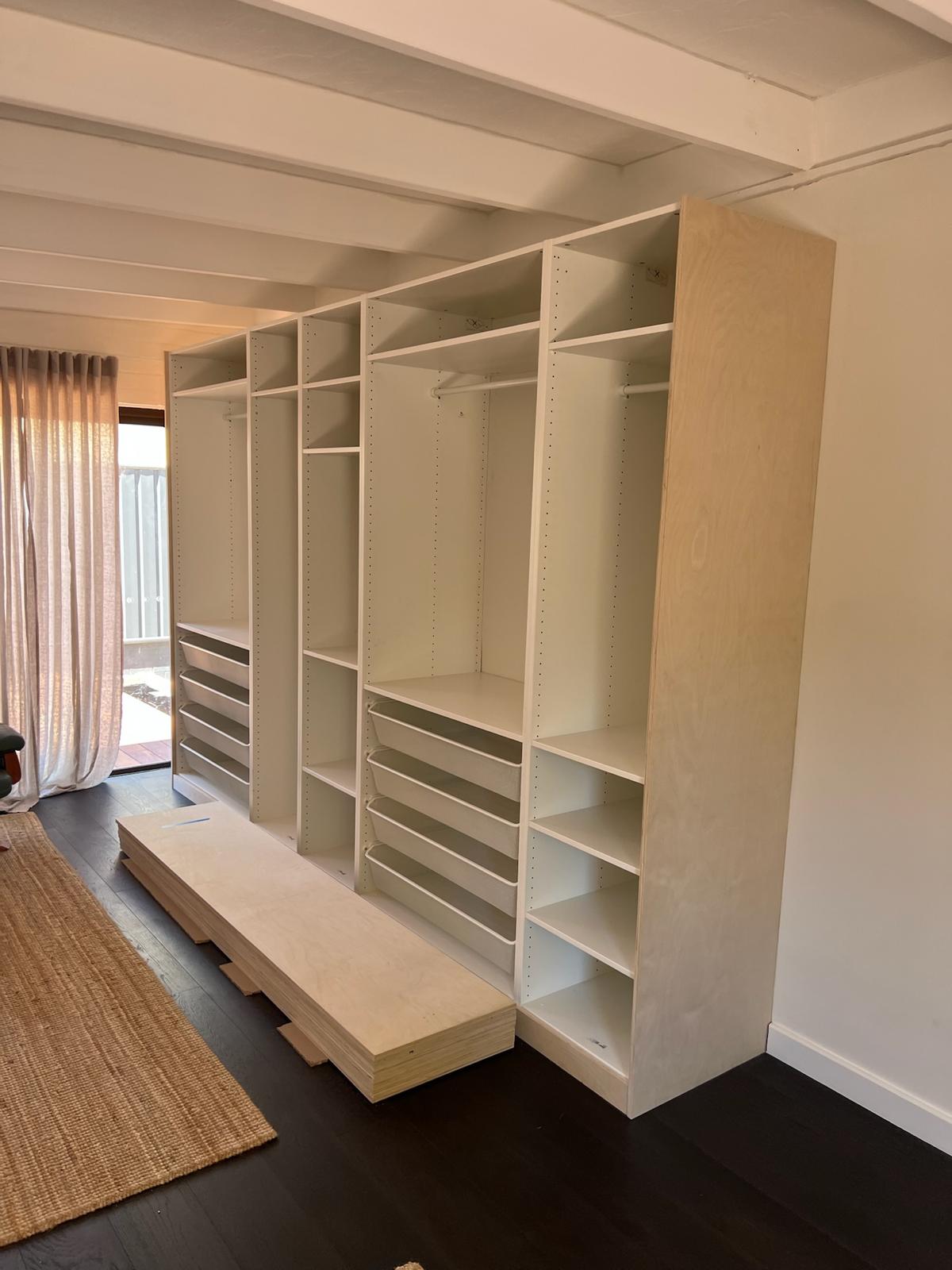
One of the most difficult questions to answer about bespoke wardrobes is also one of the most common:
"How long will it take?"
There isn't one answer.
From our experience, the amount of time involved can vary significantly depending on the size of the wardrobe, the number of units, the materials, the level of customisation, the finish and how much work needs to happen off-site.
For some projects, off-site fabrication might take around two to five days. More involved projects can take ten days or more, before installation is even completed.
Why the timeframe varies so much
Two wardrobes can look relatively similar to a customer but require very different amounts of work.
A straightforward rectangular wardrobe made from MDF with standard shelving is relatively efficient to manufacture.
Add multiple drawers, complicated angles, detailed doors and a high-end sprayed finish, and the amount of work increases considerably.
Much of the work happens before installation
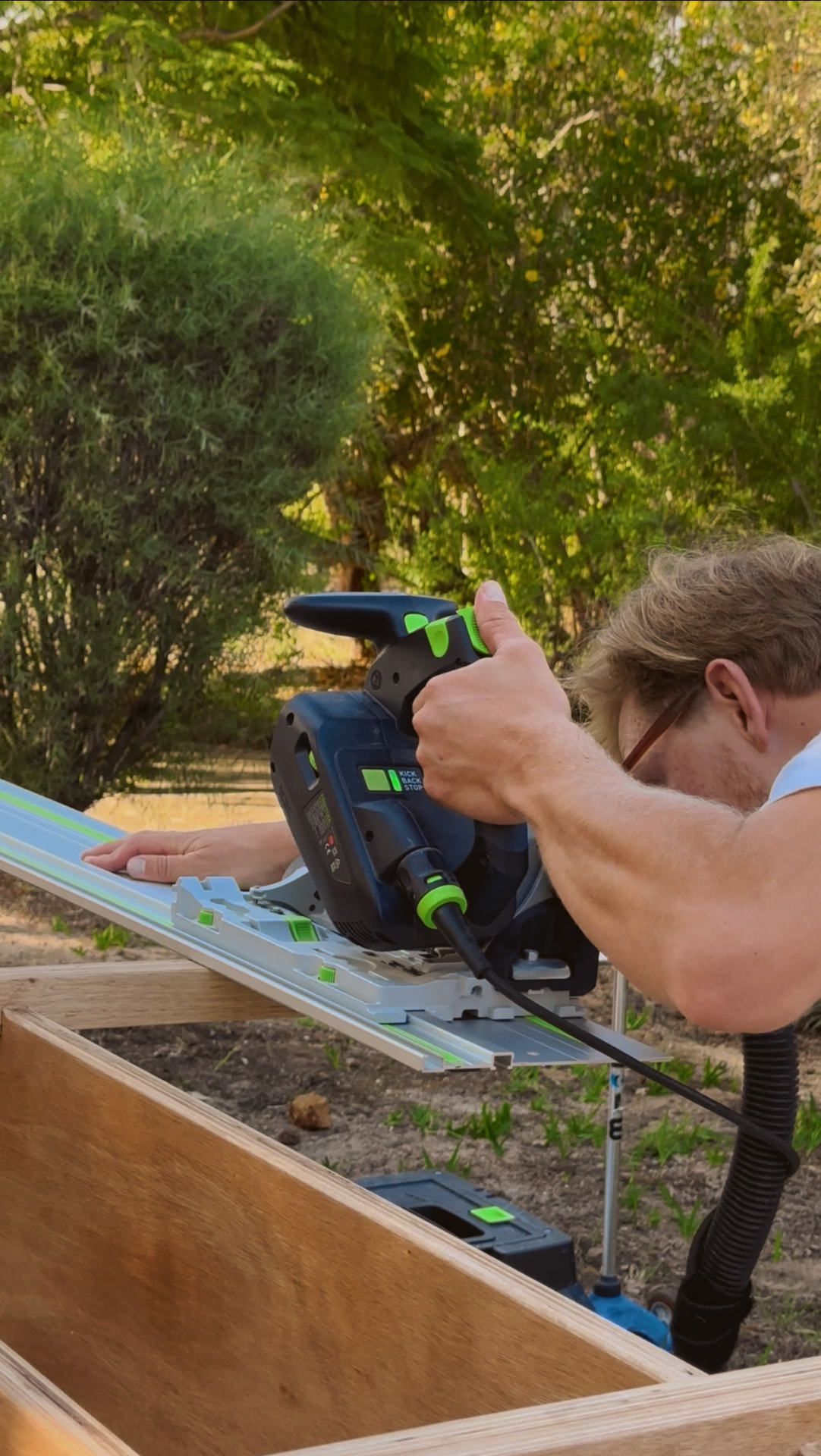
Most bespoke cabinetry is manufactured off-site.
This means that when a cabinet maker or carpenter arrives at your home for installation, you may only see the final stage of a much longer process.
The cabinetry may already have involved several days of measuring, cutting, assembly, fitting and finishing before it reaches your home.
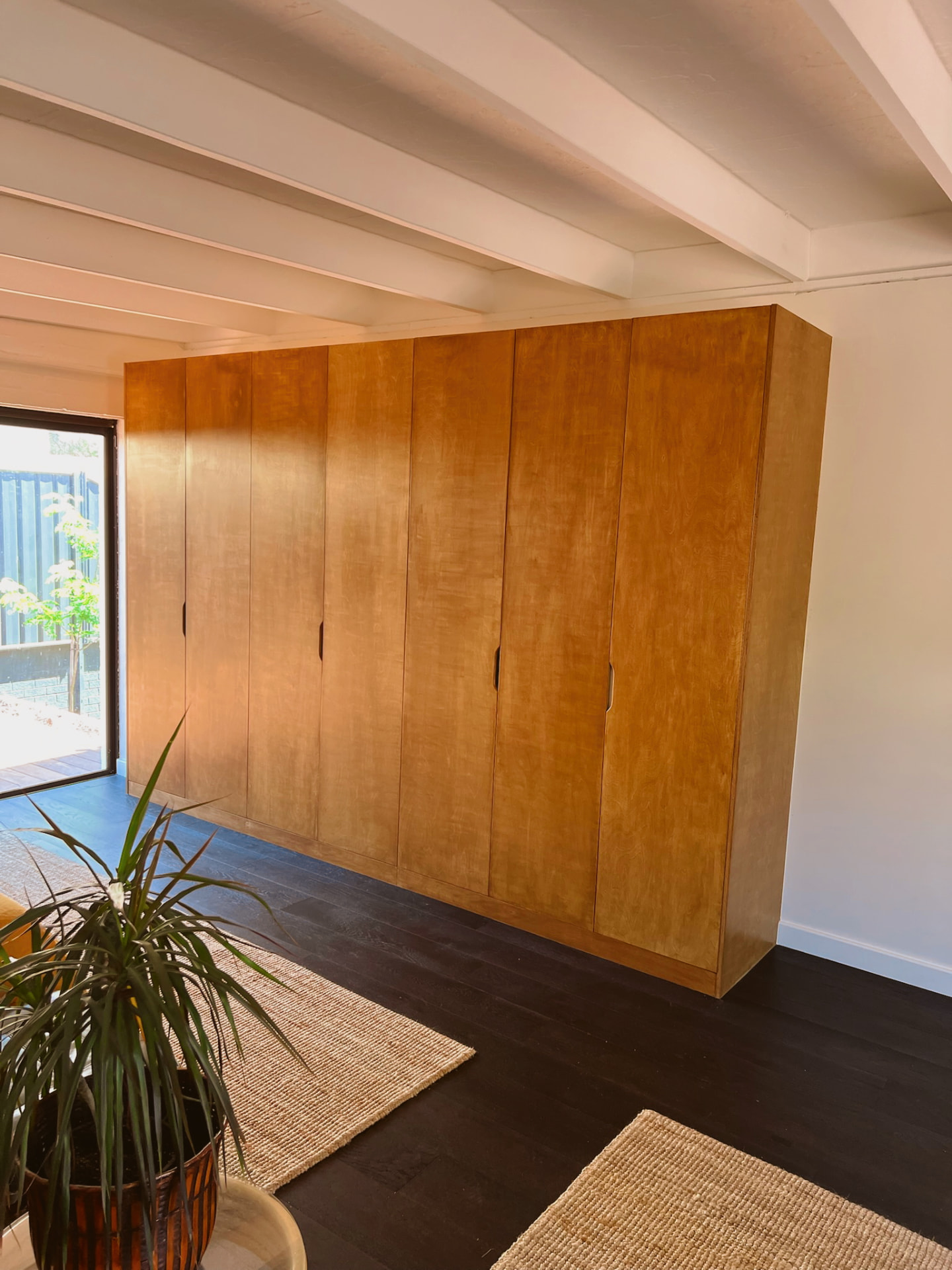
For many cabinet-making projects, installation itself may take around a day, with the cabinetry fitted into position and the final scribes and trims completed.
IKEA wardrobes can have a very different timeframe
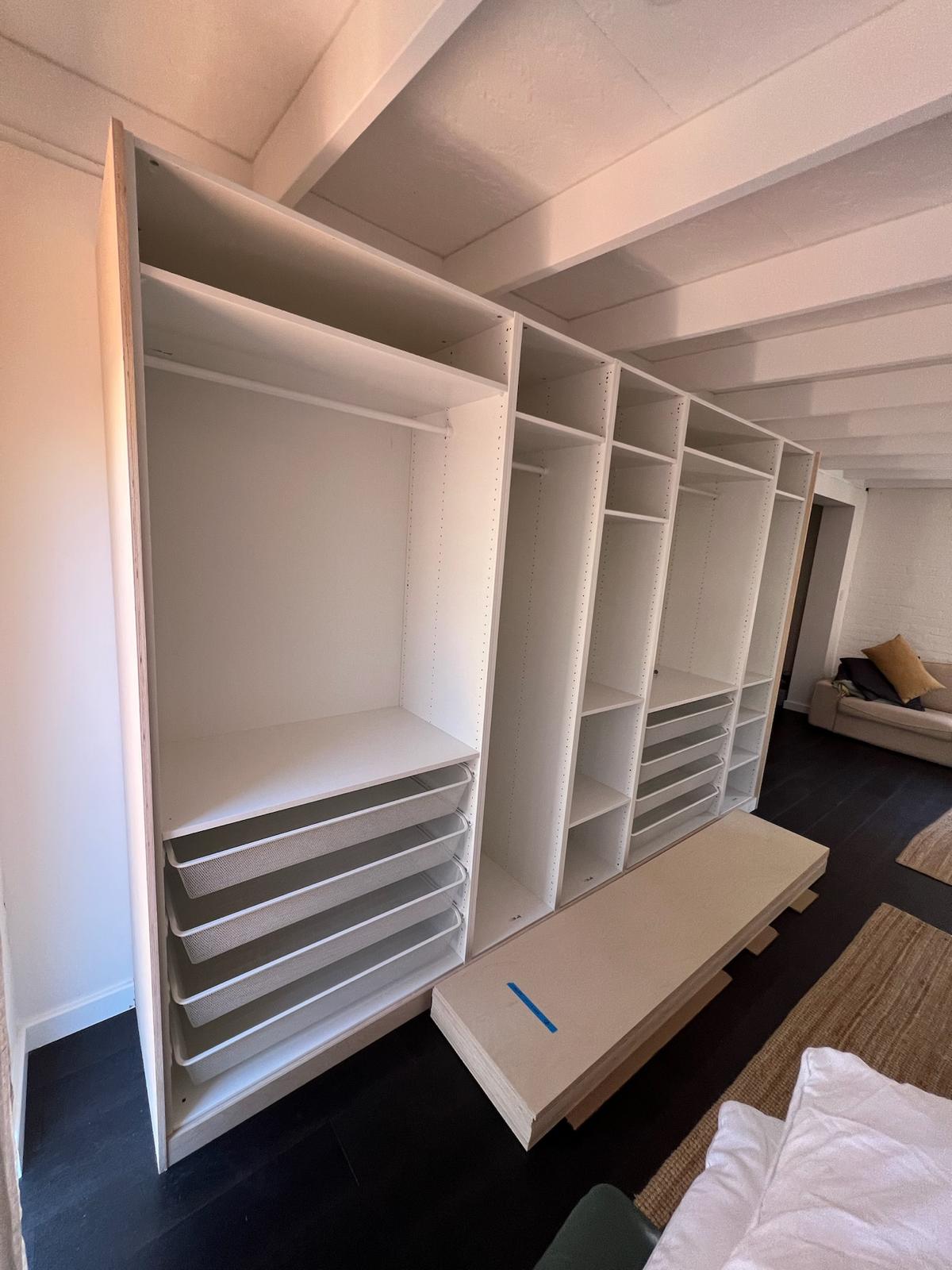
The timeframe for an IKEA-based wardrobe depends heavily on what has already been done.
Are the carcasses already assembled?
Are they already installed?
Are they fixed to the wall?
Or is the carpenter responsible for assembling, levelling, fixing and integrating everything?
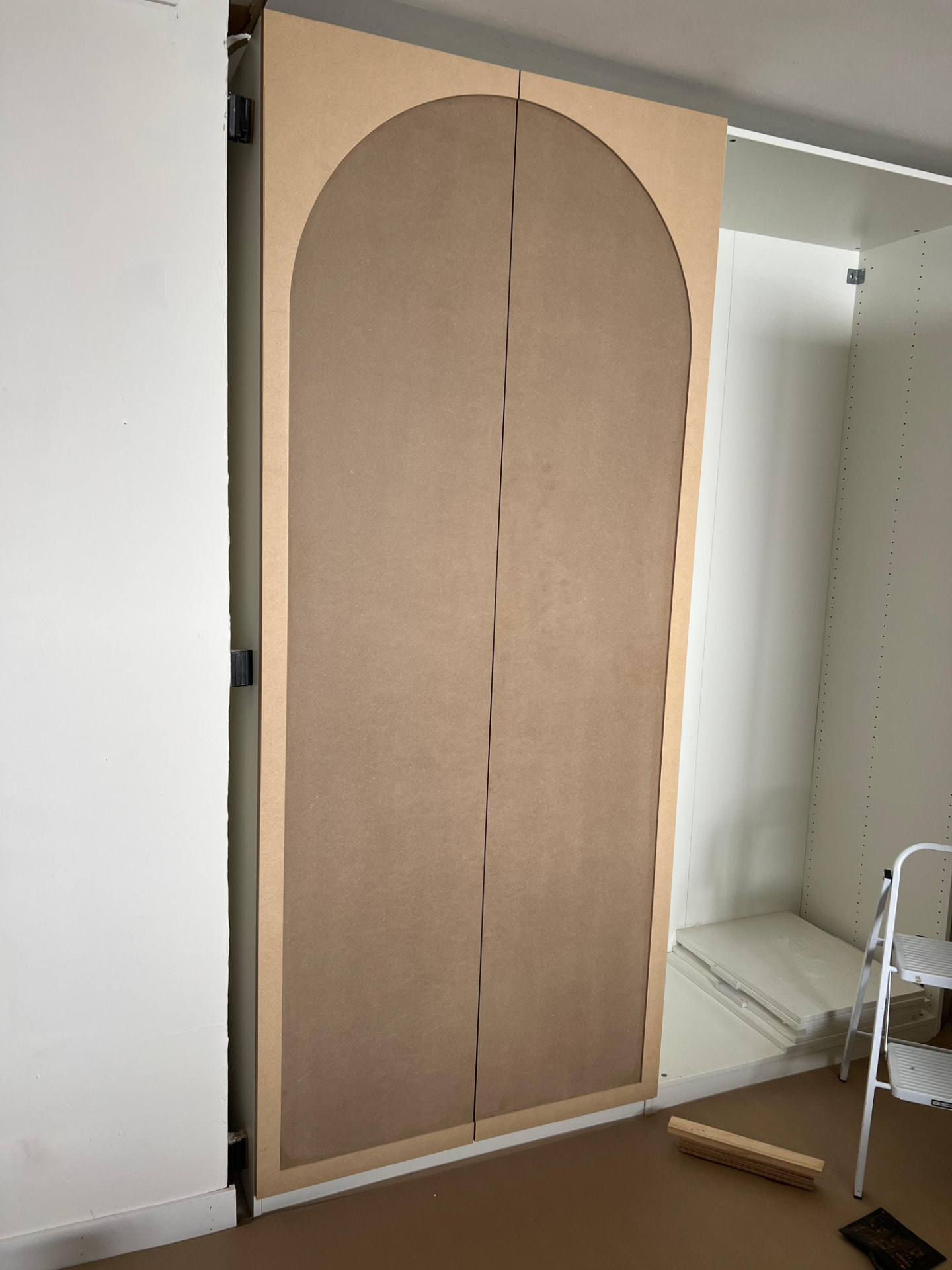
Custom doors, scribes and trims add another layer of work.
This is why it's difficult to give a meaningful timeframe without understanding exactly what the customer wants done.
Drawers take time
Drawers involve more fabrication than simple shelving.
Drawer boxes need to be built, drawer runners fitted and everything needs to be aligned correctly.
A wardrobe containing many different drawer units can therefore take considerably longer than a simple wardrobe made primarily from shelves.
Door styles make a difference
The same principle applies to doors.
Plain rectangular doors are relatively straightforward.
Arched doors, Shaker-style doors and other detailed designs involve additional fabrication and finishing.
When a wardrobe contains lots of different doors or multiple custom shapes, the manufacturing process becomes more involved.
Complicated angles require more work
Wardrobes designed around difficult spaces can require additional time for measuring, fabrication and fitting.
Angles and unusual shapes mean that components have to be individually considered rather than simply produced as standard rectangular pieces.
This is particularly important when the wardrobe needs to integrate closely with the existing room.
A high-end painted finish takes time
A high-quality sprayed finish isn't normally achieved with one quick coat.
Depending on the finish required, the process can involve:
Spray → sand/rub down → spray → sand/rub down → spray
Each additional stage takes time.
This is one of the reasons a high-end painted wardrobe can take considerably longer than a simple unfinished or straightforward pre-finished installation.
Why a one-day installation doesn't mean a one-day wardrobe
A customer may see a cabinet maker arrive with a completed wardrobe and install it in a day.
That doesn't mean the wardrobe took one day to build.
The majority of the fabrication may already have happened off-site.
For a bespoke project, the visible installation is often the final stage of a much longer process.
The real answer
For the types of wardrobe projects we work on, off-site fabrication can range from approximately two days to five days, with particularly detailed projects sometimes taking ten days or more.
Installation can then be carried out on-site, often taking around a day for the cabinetry itself, depending on the project.
The important thing is that these are rough guides rather than promises. The actual timeframe depends on the size, design, materials, finish and amount of custom work involved.